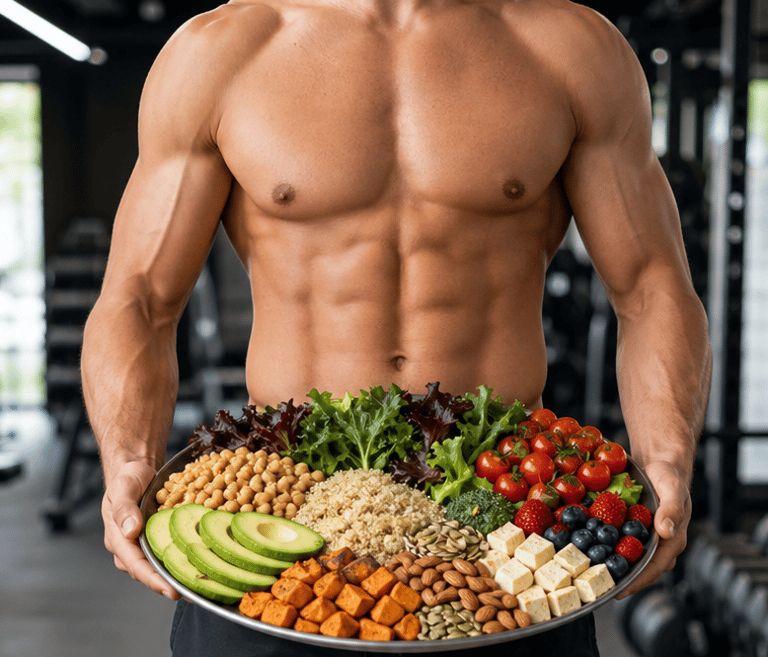
Can Vegans Build Muscle? The Science-Backed Truth
Yes, vegans can build muscle — and science proves it. Certified Vegan Fitness and Nutrition Coach Igor shares the research, and exact steps to gain muscle on a plant-based diet.
"You can't build muscle without meat."
If I had a dollar for every time I've heard that, I could retire. After 12 years eating a completely plant-based diet and over 23 years as a certified fitness and nutrition coach, I can tell you: that statement is flat-out wrong — and the science in 2025 agrees with me completely.
In this post, I'm going to break down exactly what the research says, how vegan muscle building actually works, what you need to eat, and what supplements (if any) matter. No bro science. No guesswork. Just evidence.
The evidence is no longer debatable. A landmark 2025 study published in Medicine & Science in Sports & Exercise by researchers at the University of Illinois enrolled 40 young adults and randomized them to either a vegan or omnivore diet for nine days of resistance training. The researchers biopsied participants' muscles and found no significant difference in muscle protein synthesis between the two groups.
"The longstanding belief that animal-based protein sources were better for the muscle-building response was rooted in older, single-meal studies," said lead researcher Nicholas Burd, a professor of health and kinesiology at the University of Illinois Urbana-Champaign. "When we looked at a balanced vegan diet over time, those differences disappeared."
That's not an isolated finding. A University of Exeter randomized controlled trial put 22 adults through a 10-week resistance training program on either an omnivorous or vegan diet. The result? The vegan group actually gained 3.1 kg of lean mass compared to 2.6 kg in the omnivore group, and both groups increased thigh muscle size by the same 8.3%.
Multiple reviews and meta-analyses now align: plant-based diets, when properly planned, support muscle hypertrophy comparably to omnivorous diets.
Why the Old Myth Existed (And Why It's Now Outdated)
The original skepticism wasn't baseless — it came from real science. Early studies showed that when people consumed a single meal of animal protein vs. plant protein, animal protein produced a stronger short-term spike in muscle protein synthesis. This made sense on paper: animal proteins contain more essential amino acids, especially leucine, which acts like the "on switch" for muscle building.
But here's what those early studies missed: isolated meal comparisons don't reflect how people actually eat over weeks and months. When researchers started studying whole diets — rather than single servings — the gap between vegans and omnivores consistently disappeared.
James McKendry, who studies nutrition and aging at the University of British Columbia, put it well: "On a gram-for-gram basis, animal protein is certainly of higher quality than plant-based protein. But if you're consuming enough of it in the context of a whole meal, those differences really don't come out in the wash."
The key phrase: consuming enough of it. That's where smart nutrition planning comes in.
The Real Key to Vegan Muscle Building: The Numbers That Matter
You don't need meat. You need sufficient protein, a caloric surplus, and progressive resistance training. Those three variables apply to every single human being regardless of diet.
How Much Protein Do You Actually Need?
The most comprehensive meta-analysis on this question — published in the British Journal of Sports Medicine by Morton et al. (2018), analyzing 49 studies and 1,863 participants — found that the optimal protein intake for maximizing muscle gains is 1.6–2.2 grams per kilogram of body weight per day. Above 2.2g/kg, there is no additional muscle-building benefit.
For practical context:
A 160 lb (73 kg) person needs approximately 117–160g of protein daily
A 185 lb (84 kg) person needs approximately 134–185g of protein daily
Houston Methodist exercise dietitian Mag Ayyad confirms: "For muscle building, we hike protein up to almost two times the typical amount — more like 1.2 to 1.6 grams of protein per kilogram of bodyweight per day." Every gram of that can come from plants.
The Leucine Factor: Your Secret Weapon
Leucine is the amino acid that directly triggers muscle protein synthesis (MPS) by activating the mTOR signaling pathway. Think of leucine as the spark plug — without enough of it per meal, the muscle-building engine doesn't fire at full power.
Research shows you need approximately 2.5–3g of leucine per meal to maximize MPS. Animal proteins make this easy. Plant proteins require more strategic planning — but it's completely achievable.
Top vegan leucine sources per 100g serving:
Food Leucine Content
Soybeans (raw) ~2.87g
Tempeh ~1.44g
Tofu ~1.7g
Edamame ~0.93g
Lentils (cooked) ~0.65g
Pumpkin seeds ~0.66g
The practical takeaway: center your protein meals around soy-based foods (tofu, tempeh, edamame, soy protein) and pair them with legumes, lentils, and seeds. Aiming for 30–40g of plant protein per meal ensures you hit that leucine threshold.
The Best Vegan Protein Sources for Muscle Building
Not all plant proteins are created equal. Here's what I've relied on personally for over a decade:
Tier 1 — High leucine, complete or near-complete proteins:
Tempeh (31g protein per cup) — fermented, highly bioavailable, gut-friendly
Edamame (17g per cup, cooked) — convenient, whole-food soy
Tofu, extra firm (20g per cup) — versatile, easy to include in any meal
Tier 2 — High protein, pair for complete amino acid profile:
Lentils (18g per cup, cooked) + brown rice = complete amino acid profile
Black beans (15g per cup) + quinoa = complete amino acid profile
Chickpeas (15g per cup) — great base for high-protein meals
Quinoa (8g per cup, cooked) — one of the few plant foods with all 9 essential amino acids
Tier 3 — Protein boosters to add throughout the day:
Hemp seeds (10g per 3 tbsp) — also rich in omega-3 fatty acids
Pumpkin seeds (9g per oz)
Nutritional yeast (8g per 2 tbsp) — adds a cheesy flavor and B12 often
Pea protein powder — high BCAA content, excellent for post-workout shakes
The 5 Principles of Vegan Muscle Building That Actually Work
After 12 years of plant-based training myself — and coaching hundreds of clients through the same journey — these are the principles that consistently produce results:
1. Prioritize Progressive Overload Above All Else
Your muscles grow because you continuously challenge them with increasing load, volume, or difficulty. No diet can substitute for a well-designed progressive resistance program. The nutrition supports the training — not the other way around.
2. Distribute Protein Across 4–5 Meals
Protein synthesis is maximized when leucine thresholds are triggered multiple times throughout the day. Eating 150g of protein in two meals is less effective than spreading it across five. Aim for 30–40g of protein per meal, 4–5 times daily.
3. Eat in a Caloric Surplus
You cannot build significant muscle in a caloric deficit. For lean muscle gain, aim for a modest 200–300 calorie surplus above your total daily energy expenditure (TDEE). Vegan whole foods are calorie-efficient — you may need to eat more volume than you expect.
4. Track Your Numbers (At Least Initially)
Many vegans underestimate their protein intake because they feel full from fiber-rich foods. Use a tracking app for 2–4 weeks to calibrate your portions until you know instinctively what adequate protein looks like on your plate.
5. Time Your Protein Strategically
Consume a protein-rich meal or shake within 1–2 hours after resistance training when your muscles are most primed for uptake. A post-workout shake with 30–40g of pea or soy protein is optimal.
Vegan Supplements Worth Your Money (And What to Skip)
The supplement industry is full of noise. Here's what actually matters for vegan athletes:
Essential:
Vitamin B12 — non-negotiable. Plant foods contain no reliable B12. Supplement daily with methylcobalamin (1,000 mcg).
Vitamin D3 (from algae) — most people worldwide are deficient; supports testosterone and muscle function.
Highly Recommended:
Creatine Monohydrate — fully vegan (synthesized, not animal-derived), and the most well-researched performance supplement in existence. Vegans naturally have lower muscle creatine stores due to no dietary meat intake, making supplementation even more impactful. Dose: minimum 3–5g daily.
Omega-3 (algae-based DHA/EPA) — reduces inflammation, supports recovery, and is derived directly from algae (where fish get theirs).
Optional but useful:
Plant protein powder (pea, soy, or rice/pea blend) — use to hit protein targets when whole foods fall short
Zinc and magnesium (ZMA) — commonly low in plant-based diets; support testosterone and sleep quality
Skip unless medically advised:
BCAA supplements — unnecessary if you're hitting protein targets through food and protein powder
Most proprietary "muscle building" stacks — overpriced and under-evidenced
Real-World Proof: Vegan Athletes Who Built Elite Physiques
Still need convincing? These athletes all built world-class physiques on plant-based nutrition:
Patrik Baboumian — Strongman champion, Germany's Strongest Man 2011, broke a world record carrying 1,200 lbs for 10 meters. 100% vegan.
Barny du Plessis — Mr. Universe 2014. Went vegan and says he gained muscle mass after the switch.
Nimai Delgado — IFBB Pro bodybuilder who has never eaten meat in his life.
David Carter — 300 lb NFL lineman. Went vegan and reported faster recovery, increased stamina, and improved strength.
The list of competitive vegan bodybuilders, strength athletes, and professional sports players continues to grow every year.
My Personal Experience: 12 Years of Plant-Based Training
I've been a certified personal trainer for over 23 years and have been fully plant-based for 12 of them. I competed professionally in basketball, and I can tell you that the transition to a vegan diet didn't cost me muscle — it changed my recovery, my energy, and my relationship with food for the better.
The biggest lesson? A vegan diet doesn't build muscle. Smart training with optimal nutrition does. Whether your protein comes from a chicken breast or a bowl of tempeh and lentils, the physiology is the same. Hit your numbers, train with progressive intensity, recover properly, and the results will come.
The Bottom Line
The science in 2025 is unequivocal: plant-based diets support muscle building and strength gains comparable to omnivorous diets when protein intake is adequate and well-planned. The old myth that you need meat to build muscle belongs in the same category as "you have to do cardio to lose weight" — outdated and refuted.
What you do need:
1.6–2.2g of protein per kg of body weight daily
Leucine-rich plant foods (soy, tempeh, lentils) distributed across 4–5 meals
A caloric surplus
A well-designed progressive resistance program
Vitamin B12, vitamin D, creatine, and algae-based omega-3 supplementation
Ready to start building muscle on a plant-based diet?
I offer online fitness coaching for clients worldwide and in-person personal training in Las Vegas. Book your free consultation today and let's build the strongest, healthiest version of you — without compromising your values.
Also read: Complete Vegan Protein Guide for Athletes — the second post in this series.
***
About the Author: Igor is a NASM Certified Corrective Exercise Specialist, ACE Certified Personal Trainer and Plant-Based Nutrition Coach with 23+ years of experience. He has followed a fully plant-based diet for 12 years and coaches clients both online and in Las Vegas, Nevada.
Medical & Health Disclaimer
The information provided on this blog is intended for general informational and educational purposes only. Nothing on this site constitutes medical advice, and no information here should be used as a substitute for professional medical advice, diagnosis, or treatment from a licensed physician or qualified healthcare provider.
Igor Mihajlovic is a ACE Certified Personal Trainer, NASM Corrective Exercise Specialist, and Plant-Based Nutrition Coach — not a medical doctor. The training advice, nutrition guidance, and supplement recommendations shared on this blog reflect his personal experience and professional expertise as a certified fitness professional, and are not a replacement for individualized medical care.
Always seek the advice of your physician or another qualified health provider before beginning any exercise program, changing your diet, or taking any nutritional supplement. Never disregard professional medical advice or delay seeking it because of something you have read on this website.
Individual results will vary. Testimonials and examples used on this blog do not guarantee that anyone will achieve the same or similar results.
Sources & References
Askow AT, Burd NA, et al. — Impact of Vegan Diets on Resistance Exercise-Mediated Myofibrillar Protein Synthesis — University of Illinois, Medicine & Science in Sports & Exercise (2025)
Monteyne AJ, et al. — Vegan and Omnivorous High Protein Diets Support Comparable Myofibrillar Protein Synthesis Rates and Skeletal Muscle Hypertrophy in Young Adults — University of Exeter, Journal of Nutrition (2023)
Morton RW, Murphy KT, et al. — A Systematic Review, Meta-Analysis and Meta-Regression of the Effect of Protein Supplementation on Resistance Training-Induced Gains in Muscle Mass and Strength — British Journal of Sports Medicine (2018)
University of Illinois News — Omnivorous? Vegan? Makes No Difference to Muscle Building After Weight Training — 2025
University of Exeter News — Vegan Protein Supports Muscle Building as Effectively as Animal Protein — 2023