
Complete Vegan Protein Guide for Athletes: Sources, Amounts & Timing
Your complete vegan protein guide for athletes — how much you need, the best plant-based sources, protein timing, and top supplements. Science-backed.
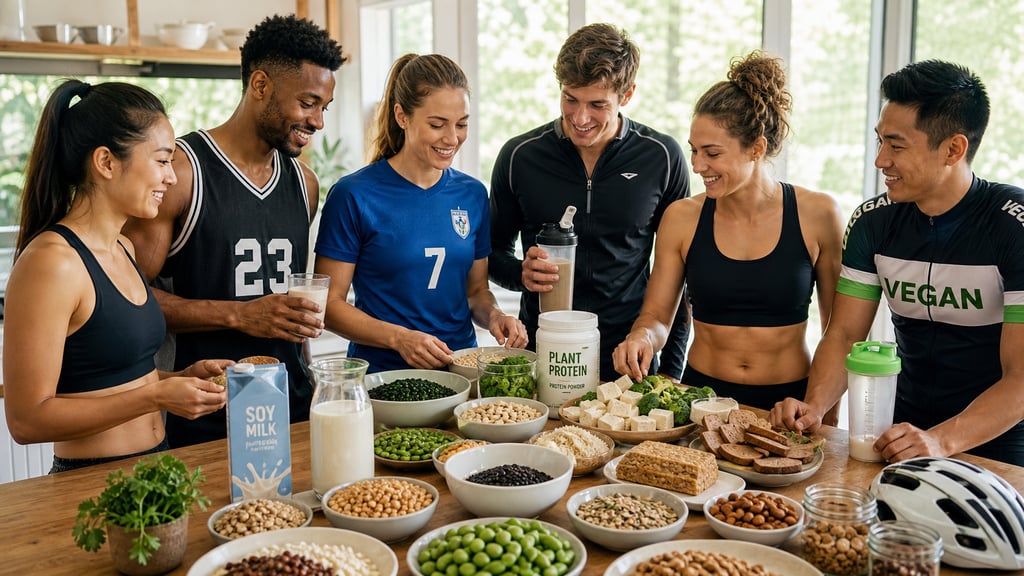
One of the first questions every athlete asks when they go plant-based is: "Where do I get my protein?"
It's a fair question — and after 12 years of following a completely vegan diet as a certified personal trainer and nutrition coach, I've answered it hundreds of times. The good news is that not only can you meet every protein requirement on a plant-based diet, but when you do it right, you'll also get anti-inflammatory compounds, fiber, and micronutrients that animal protein simply doesn't offer.
This is your complete, science-backed roadmap. By the end of this guide, you'll know exactly how much protein you need, which sources are best, how to combine them for a complete amino acid profile, when to eat them, and which supplements are actually worth your money.
How Much Protein Do You Actually Need as a Vegan Athlete?
Let's start with the numbers — because most people get this wrong in both directions. Some eat far too little protein and plateau. Others obsess over protein to the point that it becomes counterproductive.
The American College of Sports Medicine (ACSM), the Academy of Nutrition and Dietetics (AND), and Dietitians of Canada jointly recommend that athletes consume 1.2–2.0g of protein per kilogram of body weight per day to support muscle repair, adaptation, and recovery. The gold-standard meta-analysis by Morton et al. (2018), which analyzed 49 studies and 1,863 participants, puts the ceiling for muscle-building benefits at 1.6–2.2g/kg/day — beyond which there is no additional anabolic benefit.
For vegan athletes specifically, research indicates a slight upward adjustment is advisable due to the lower digestibility of some plant proteins compared to animal proteins. Here are the practical recommendations:
Recreational vegan exerciser: 1.2–1.4g per kg of body weight per day
Vegan endurance athlete: 1.6–1.8g per kg of body weight per day
Vegan strength or power athlete: 1.8–2.2g per kg of body weight per day
Vegan athlete in a caloric deficit (cutting phase): 2.2–2.6g per kg of body weight per day
Practical example: A 180 lb (82 kg) vegan strength athlete needs approximately 148–180g of protein per day. Every gram of this is achievable from plants — and I've been hitting these numbers on a plant-based diet for over a decade.
The Science of Plant Protein: What "Bioavailability" Actually Means for You
You've probably heard that plant protein is "less bioavailable" than animal protein. This is technically true — and also largely irrelevant if you know how to eat.
Here's the science: protein sources are measured using two scoring systems — PDCAAS (Protein Digestibility Corrected Amino Acid Score) and the more modern DIAAS (Digestible Indispensable Amino Acid Score). A score of 1.0 means the protein provides all essential amino acids in sufficient amounts. Animal proteins score close to 1.0. Many plant proteins score between 0.6–0.9 in isolation.
But here's the key insight that changes everything: these scores are calculated for isolated protein sources, not whole diets. When you eat a diverse range of plant proteins across the day — as any sensible vegan does — the amino acid profiles of different foods complement each other, and your overall protein quality matches or exceeds that of animal-based diets.
Walter Willett, Professor of Epidemiology and Nutrition at Harvard T.H. Chan School of Public Health, has stated:
"If we eat a variety of plant foods in our diet, the overall mix of amino acids isn't substantially different from what we would get from eating animal protein."
The practical takeaway: eat variety, hit your protein numbers, and don't stress over individual food scores.
Complete vs. Incomplete Proteins: The Myth You Can Stop Worrying About
For decades, vegans were told they had to combine specific foods at every single meal to form "complete proteins." Modern nutrition science has now put this myth to rest.
All plants synthesize all 20 amino acids — including all 9 essential ones — because they must do so to survive and build their own proteins. So at a purely biochemical level, every plant food does contain some trace amount of each essential amino acid. The claim that "plants are missing amino acids" is technically false. However, the real issue — and where the debate lives — is quantity, proportion, and digestibility, not presence or absence.
Where the "Incomplete Protein" Myth Comes From
The "complete vs. incomplete" protein framework is widely considered outdated and misleading by current nutrition researchers. It originated from older animal studies using isolated single protein sources, not from how humans actually eat. The American Heart Journal published research as early as 2002 showing that any single unprocessed plant food, consumed in calorie-sufficient amounts, provides essential amino acid intakes exceeding recommended requirements. The terminology stuck in pop nutrition despite the science moving on.
What "Limiting Amino Acids" Actually Means
The more scientifically accurate concept is "limiting amino acids" — the one essential amino acid present in the lowest proportion relative to human needs. The critical ones for plant-based eaters are:
Lysine — the most common limiting amino acid, found in low proportions in grains (wheat, rice, corn)
Methionine + Cysteine — lower in legumes and soy relative to human requirements
Leucine — identified alongside lysine as a concern in recent research on long-term vegans
Tryptophan — deficient in corn specifically; generally adequate in most other plant foods
The key word is proportion, not presence. Grains have lysine; they just have relatively less of it compared to their other amino acids and to human needs.
The truth: your body maintains a free amino acid pool that it draws from throughout the day. You do not need to combine complementary proteins at every meal — you just need to eat a variety of protein-rich plant foods across the day.
That said, it's still smart to know which plant foods are complete proteins and which benefit from pairing.
Plant-based proteins with the strongest complete amino acid profile:
- Soy in all forms: tempeh, tofu, edamame, soy milk
- Quinoa
- Hemp seeds
- Buckwheat
- Chia seeds
Smart complementary pairings for incomplete proteins:
- Beans and legumes (low in methionine) pair best with grains, nuts, or seeds
- Grains like rice, oats, and wheat (low in lysine) pair best with legumes
- Nuts and seeds (low in lysine) pair best with legumes
- Corn (low in tryptophan and lysine) pairs best with legumes
Classic examples include rice and beans, lentil soup with whole grain bread, tofu stir-fry with quinoa, and hummus with whole wheat pita. You're probably already eating these combinations naturally.
The 20 Best Vegan Protein Sources for Athletes
Not all plant proteins are created equal. Here are the highest-quality, most practical protein sources for plant-based athletes.
Tier 1 — High Protein With a Complete or Near-Complete Amino Profile
Tempeh — 20.3g of protein per 100g
Fermented soy with the highest bioavailability of any plant protein. Gut-friendly and contains all essential amino acids. This is my personal daily staple.
Seitan (wheat gluten) — 17.9g of protein per 100g
Exceptionally high protein content. Note: not suitable for gluten-sensitive athletes.
Edamame — 17.2g of protein per 120g serving
Whole soy beans, rich in leucine, and a great pre-workout snack straight from the freezer.
Tofu (extra firm) — 16.3g of protein per 160g serving
Versatile, complete protein. Works in scrambles, stir-fries, and even smoothies.
Hemp seeds — 9g of protein per 28g serving
A complete protein that is also rich in omega-3 fatty acids. Add to anything — oatmeal, smoothies, salads.
Tier 2 — High Protein, Best Combined for Full Amino Profile
Kidney beans (cooked) — 10.4g of protein per 120g serving
Pair with rice for a complete amino acid profile.
Lentils (cooked) — 9g of protein per 100g
Also high in iron and folate. A daily nutrition powerhouse.
Chickpeas (cooked) — 8.4g of protein per 120g serving
Versatile base for salads, curries, and wraps. Pair with grains.
Nutritional yeast — 10g of protein per 2 tablespoons
Often fortified with B12 and has a satisfying cheesy flavor.
Oats — 8g of protein per 50g serving
An excellent breakfast base. Pair with soy milk and hemp seeds to turn it into a high-protein meal.
Spirulina — 8g of protein per 2 tablespoons
One of the most protein-dense foods by weight on the planet. Add to smoothies.
Quinoa (cooked) — 8g of protein per cup
A complete protein and an excellent substitute for rice.
Black beans (cooked) — 6g of protein per 100g
Pair with quinoa or whole grain corn tortillas.
Tier 3 — Protein Boosters to Add Throughout the Day
Pumpkin seeds — 9g per 28g serving
Also high in zinc and magnesium, which are key minerals many vegans are low on.
Peanut butter — 7g per 2 tablespoons
Easy, calorie-dense protein addition to oats or smoothies.
Almond butter — 7g per 2 tablespoons
Healthy fats combined with protein.
Soy milk — 7g per 200ml
The best plant milk for protein content by a wide margin.
Whole grain bread — 8g per 2 slices
An easy daily protein accumulator that most people overlook.
Protein Timing: When to Eat Protein for Maximum Results
The when matters almost as much as the how much. The joint position paper from ACSM, AND, and Dietitians of Canada recommends spreading protein intake across the day in moderate, regular doses — targeting 0.3g of protein per kg of body weight every 3–5 hours, including within two hours after exercise.
The 4-Meal Protein Distribution Model
Here is how a 180 lb (82 kg) strength athlete targeting 160g of protein per day can distribute it across four meals:
Breakfast — Target: 35–40g
Tofu scramble (20g) + oats with soy milk and hemp seeds (15g)
Pre-workout snack — Target: 20–25g
Edamame (17g) + peanut butter with rice cakes (7g)
Post-workout meal — Target: 40–45g
Tempeh stir-fry with quinoa (35g) + glass of soy milk (7g)
Dinner — Target: 35–40g
Lentil dal with brown rice and nutritional yeast (35g)
Daily total: approximately 160g
Notice that this entire day hits the protein target without any exotic or expensive foods — just real, whole plant foods most people already eat.
Post-Workout Protein: The 2-Hour Window
While research shows that total daily protein intake matters more than exact timing, consuming protein within 1–2 hours post-training remains a best practice for maximizing muscle protein synthesis. Research confirms that plant-based protein consumed post-workout effectively supports recovery and muscle adaptation in trained athletes.
The practical post-workout approach for vegan athletes:
- Whole food option: A large portion of tempeh or tofu with quinoa or lentils
- Convenience option: 30–40g of pea or soy protein powder mixed in plant milk
- Add a small amount of fast-digesting carbohydrate such as a banana or rice cakes to replenish glycogen alongside your protein
The Leucine Factor: The Most Important Amino Acid You've Never Prioritized
Leucine is the amino acid that directly activates the mTOR signaling pathway — essentially the molecular "on switch" for muscle protein synthesis. Research suggests you need approximately 2.5–3g of leucine per meal to maximally trigger muscle building.
Animal proteins hit this threshold easily. Plant proteins require strategy — but it is completely achievable. The solution is to eat more leucine-rich plant foods per meal and/or supplement with soy protein, which has the highest leucine content of any plant protein available.
Top vegan leucine sources:
- Soy protein isolate — approximately 7.6g of leucine per 100g
- Tofu (firm) — approximately 1.7g of leucine per 100g
- Tempeh — approximately 1.4g of leucine per 100g
- Edamame — approximately 0.9g of leucine per 100g
- Lentils (cooked) — approximately 0.65g of leucine per 100g
- Pumpkin seeds — approximately 0.66g of leucine per 100g
The practical fix: Center your post-workout meal or shake around soy or pea protein and aim for 30–40g of plant protein per meal rather than 20–25g to ensure the leucine threshold is consistently met.
Vegan Protein Powders: What to Buy and What to Skip
Whole food protein should always be your foundation — but protein powders are a practical tool for hitting daily targets, especially post-workout when you need fast absorption and convenience.
The Best Plant-Based Protein Powders for Athletes
1. Pea Protein Isolate
Second only to soy in quality. Rich in branched-chain amino acids (BCAAs), highly digestible, and easy on the stomach. One of the most popular choices among vegan athletes worldwide.
2. Pea + Rice Protein Blend
Combining pea and rice protein creates a complete amino acid profile that rivals whey in functional quality. This is the blend most recommended by registered dietitians for vegan athletes. Look for a 70/30 pea-to-rice ratio.
3. Hemp Protein
Lower protein content per serving (around 15g) but naturally contains omega-3 fatty acids and fiber. Better used as a daily nutritional supplement rather than a dedicated post-workout recovery powder.
Powders to avoid:
- Single-source rice protein alone — low in the essential amino acid lysine
- Proprietary blends with long ingredient lists and low actual protein per serving
- Products with artificial sweeteners if you are sensitive to gastrointestinal distress
Sample High-Protein Vegan Day for a 180 lb Athlete (160g Protein Target)
Here is a full day of eating that hits 160g of protein using nothing but whole plant foods and one protein shake:
Breakfast
1 cup firm tofu scramble + 1 cup oats + 1 cup soy milk + 3 tablespoons hemp seeds
Protein: approximately 38g
Lunch
1.5 cups tempeh + 1 cup quinoa + leafy green salad + 2 tablespoons nutritional yeast
Protein: approximately 45g
Post-Workout Shake
40g pea/rice protein blend + 1 banana + 1 cup oat milk
Protein: approximately 38g
Dinner
1.5 cups lentil dal + 1 cup brown rice + 1 cup edamame
Protein: approximately 42g
Daily Total: approximately 163g
3 Supplements Every Vegan Athlete Should Take
Protein supplements are optional. These three are not.
1. Vitamin B12 (Methylcobalamin)
There is no reliable plant food source of B12. Period. Every vegan athlete must supplement without exception. Recommended dose: 1,000 mcg daily, or 2,000–2,500 mcg every 2–3 days.
2. Vitamin D3 (Algae-Based)
Vitamin D is critical for calcium absorption, immune function, testosterone production, and muscle function. Most vegan D3 supplements are now derived from algae — a 100% plant-based source. Recommended dose: 1,000–2,000 IU daily, or as directed by a blood test.
3. Creatine Monohydrate
The single most evidence-backed performance supplement in existence. Vegans have naturally lower muscle creatine stores because creatine is found almost exclusively in meat — making supplementation even more impactful for plant-based athletes. A systematic review confirmed creatine supplementation significantly improves strength, power, and lean mass in resistance-trained athletes. Recommended dose: 3–5g daily. No loading phase required. Fully vegan — synthesized, not animal-derived.
The Bottom Line
A complete, performance-ready vegan protein strategy comes down to five principles:
1. Hit your daily targets — 1.8–2.2g per kg of body weight for strength athletes
2. Prioritize soy-based foods — tempeh, tofu, edamame, and soy protein have the highest quality scores and leucine content
3. Eat variety across the day — diverse plant foods ensure you get all 9 essential amino acids without stressing over combinations at every meal
4. Distribute protein across 4–5 meals — aim for 30–40g per meal to consistently hit the leucine threshold
5. Supplement the gaps — B12, vitamin D3, and creatine are non-negotiable for vegan athletes
Follow these principles consistently and there is nothing your plant-based body cannot achieve in the gym, on the court, or in competition.
Ready to have a personalized plant-based nutrition plan built specifically for your training goals?
My plant-based nutrition coaching program is available worldwide via online coaching. I'll map out your exact protein targets, meal structure, and supplement protocol based on your body weight, training style, and goals.
Also read: Can Vegans Build Muscle? The Science-Backed Truth — the first post in this series.
***
About the Author: Igor is a NASM Certified Corrective Exercise Specialist, ACE Certified Personal Trainer and Plant-Based Nutrition Coach with 23+ years of experience. He has followed a fully plant-based diet for 12 years and coaches clients both online and in Las Vegas, Nevada.
Medical & Health Disclaimer
The information provided on this blog is intended for general informational and educational purposes only. Nothing on this site constitutes medical advice, and no information here should be used as a substitute for professional medical advice, diagnosis, or treatment from a licensed physician or qualified healthcare provider.
Igor Mihajlovic is a ACE Certified Personal Trainer, NASM Corrective Exercise Specialist, and Plant-Based Nutrition Coach — not a medical doctor. The training advice, nutrition guidance, and supplement recommendations shared on this blog reflect his personal experience and professional expertise as a certified fitness professional, and are not a replacement for individualized medical care.
Always seek the advice of your physician or another qualified health provider before beginning any exercise program, changing your diet, or taking any nutritional supplement. Never disregard professional medical advice or delay seeking it because of something you have read on this website.
Individual results will vary. Testimonials and examples used on this blog do not guarantee that anyone will achieve the same or similar results.
Sources & References
1. Morton RW, Murphy KT, et al. — A Systematic Review, Meta-Analysis and Meta-Regression of the Effect of Protein Supplementation on Resistance Training-Induced Gains in Muscle Mass and Strength — British Journal of Sports Medicine (2018)
Link: https://pubmed.ncbi.nlm.nih.gov/28698222/
2. Monteyne AJ, et al. — Vegan and Omnivorous High Protein Diets Support Comparable Myofibrillar Protein Synthesis Rates and Skeletal Muscle Hypertrophy — Journal of Nutrition / PMC (2023)
Link: https://pmc.ncbi.nlm.nih.gov/articles/PMC10308267/
3. Zhao S, et al. — The Effect of Plant-Based Protein Ingestion on Athletic Ability in Healthy People — A Bayesian Meta-Analysis — Nutrients (2024)
Link: https://pubmed.ncbi.nlm.nih.gov/39203884/
4. Lopez-Moreno M, et al. — Are Plant-Based Diets Detrimental to Muscular Strength? A Systematic Review and Meta-Analysis — Sports Med Open (2025)
Link: https://pmc.ncbi.nlm.nih.gov/articles/PMC12130401/
5. van Vliet S, Burd NA, van Loon LJC — The Anabolic Response to Plant-Based Protein Ingestion — PMC / NIH (2021)
Link: https://pmc.ncbi.nlm.nih.gov/articles/PMC8566416/
6. Rogerson D — Nutritional Considerations for the Vegan Athlete — PMC / NIH (2023)
Link: https://pmc.ncbi.nlm.nih.gov/articles/PMC10334161/
7. Willett W — Weighing the Benefits of Plant Protein for Human and Planetary Health — Harvard T.H. Chan School of Public Health (2024)
Link: https://hsph.harvard.edu/news/plant-protein-milk-planetary-health/
8. ACSM/AND/Dietitians of Canada — Protein Needs of Athletes — Joint Position Paper