
The Anti-Inflammatory Diet: A Plant-Based Guide to Less Pain, More Energy, and Better Health (2026)
Discover how a plant-based anti-inflammatory diet reduces chronic pain, boosts energy, and protects against disease — backed by the latest 2025 and 2026 research.
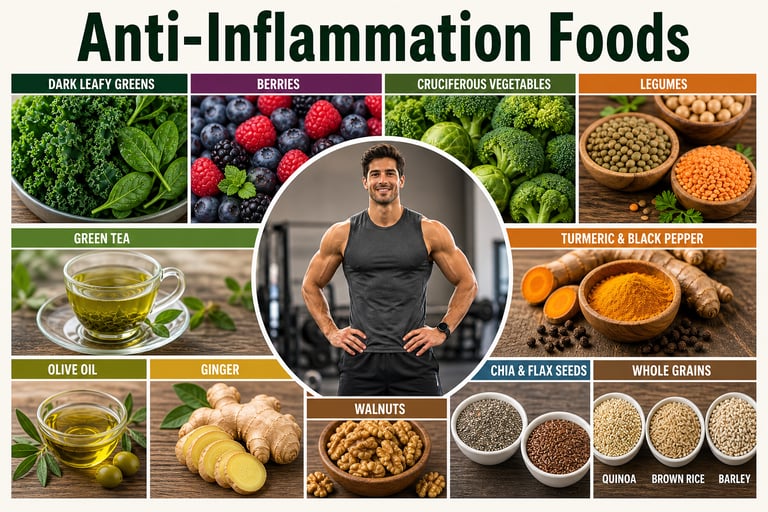
If you have ever woken up feeling stiff and achy without a clear reason, experienced persistent fatigue that sleep doesn't fix, dealt with joint pain that flares without warning, or struggled with a chronic condition that doctors describe as "inflammation-related" — this post is for you.
Chronic inflammation is now recognized as the underlying driver of most of the major diseases affecting people today. Heart disease, type 2 diabetes, arthritis, inflammatory bowel disease, Alzheimer's, and even certain cancers all have chronic inflammation at their root. And one of the most powerful tools available to manage and reduce it is not a prescription drug — it is what you eat every single day.
After 12 years as a plant-based athlete and certified nutrition coach, I have seen how profoundly diet shapes the way people feel. This guide will walk you through exactly what chronic inflammation is, what the latest 2025 and 2026 research says about how a plant-based diet fights it, the foods that cause it, the foods that heal it, and a simple daily framework you can start implementing today.
What Is Chronic Inflammation — and Why Does It Matter?
Inflammation is not inherently bad. Acute inflammation is your immune system doing its job. When you cut your finger or catch a cold, your body sends a rush of white blood cells and chemical signals to the site of damage to fight off invaders and begin the healing process. That temporary redness, swelling, and warmth is inflammation working exactly as designed.
The problem is chronic, low-grade inflammation — the kind that simmers silently in your body for years without obvious symptoms, gradually damaging tissues, disrupting hormones, accelerating aging, and laying the groundwork for serious disease. This type of inflammation is not triggered by an injury or infection. It is triggered by what you eat, how you move, how much you sleep, and how much stress you carry.
What makes chronic inflammation particularly dangerous is that it often shows no dramatic symptoms until significant damage has already occurred. A 2025 study from WEHI in Melbourne found that even a few meals high in saturated fat can begin depleting key gut-protective proteins within just two days — well before any visible symptoms of inflammation appear. The researchers described the process as "initially silent, remaining hidden in our bodies until years later, where it can present as chronic inflammation." You can be building a reservoir of inflammation right now without knowing it.
Fortunately, the science is equally clear that diet can reverse this process — and a whole-food, plant-based diet is one of the most powerful anti-inflammatory interventions available.
What the 2025 and 2026 Research Says
The evidence connecting plant-based diets to reduced inflammation and better long-term health has reached a new level of strength in the last two years. These are the findings that matter most.
The Harvard Study: 86% Better Odds of Healthy Aging
In March 2025, Harvard researchers published one of the most significant nutrition studies of the decade in the journal Nature Medicine. They followed more than 105,000 adults aged 39 to 69 for 30 years and tracked how their midlife diets influenced whether they reached age 70 free from chronic disease while maintaining cognitive, physical, and mental health.
The most powerful dietary pattern they identified — the Alternative Healthy Eating Index — emphasizes fruits, vegetables, whole grains, nuts, legumes, and healthy fats while discouraging red and processed meats, sugary beverages, sodium, and refined grains. People whose diets most closely matched this pattern had an 86% greater chance of healthy aging at 70 and more than twice the chance of healthy aging at 75, compared to those who ate the least healthfully. As the lead researchers summarized: "Maintaining a healthy diet that was rich in fruits, vegetables, whole grains, unsaturated fats, nuts, and legumes during mid-life was linked to a higher likelihood of healthy aging."
University of Warwick: Plant-Based Diets Significantly Lower CRP
In April 2026, researchers at the University of Warwick published the first systematic review and meta-analysis of randomized controlled trials to examine whether plant-based dietary patterns lower C-reactive protein — the primary blood marker doctors use to measure systemic inflammation. Analyzing seven high-quality trials involving 541 participants, they found that plant-based diets reduced CRP levels by an average of 1.13 mg/L compared to omnivorous diets.
To understand the clinical significance: CRP levels below 1 mg/L are considered low cardiovascular risk, while levels above 3 mg/L are considered high risk. A reduction of 1.13 mg/L can literally move someone from one risk category to another — purely through dietary change. The lead author stated: "CRP is one of the body's main signals of inflammation, and lower levels generally indicate less background inflammation circulating in the body."
Plant-Based Diets Reduce Key Inflammatory Biomarkers Across the Board
A comprehensive narrative review published in November 2025 synthesized findings from randomized trials, cohort studies, and mechanistic research. The conclusion was clear: healthful plant-based diets are consistently associated with lower CRP, lower IL-6, lower TNF-α, and other inflammatory markers. The review found clinical evidence for potential reductions in respiratory infections, asthma exacerbations, and some autoimmune conditions through plant-based eating.
AGEs: The Hidden Inflammatory Compounds in Animal Products
A study published in Obesity Science and Practice found that switching to a plant-based diet reduced dietary advanced glycation end-products (AGEs) by 79%, compared to just 15% for a diet that still included meat and dairy. AGEs are pro-inflammatory compounds formed when proteins or fats combine with glucose — and animal products naturally contain far more of them than plant foods. The reduction in AGEs was linked to an average weight loss of 14 pounds and improved insulin sensitivity.
Plant-Based Diets and Inflammatory Bowel Disease
A large prospective study published in Molecular Nutrition and Food Research in 2025 followed 143,434 individuals in the UK over an average of 14.5 years. A healthy plant-based diet was associated with an 8% lower risk of ulcerative colitis and a 14% lower risk of Crohn's disease. The researchers concluded that "the anti-inflammatory properties of plant-based foods" were the key mechanism behind this protection.
The Foods That Drive Inflammation
Before we talk about the foods that heal, it helps to understand what is actively working against you. These are the dietary patterns most consistently linked to elevated inflammatory markers in the research.
Processed and red meat
Processed meats — bacon, sausage, hot dogs, deli meats — are among the most pro-inflammatory foods in the modern diet. They are high in saturated fat, nitrates, preservatives, and sodium, and they produce pro-inflammatory compounds when cooked at high heat. Red meat also contains heme iron, which — unlike the non-heme iron in plants — is absorbed even when the body doesn't need it, and at high levels has been linked to oxidative stress and increased inflammatory markers.
Refined carbohydrates and added sugar
White bread, white pasta, pastries, sugary cereals, packaged snacks, and sweetened drinks drive rapid spikes in blood sugar, which trigger a pro-inflammatory response in the body. They are also stripped of the fiber that would otherwise slow glucose absorption and feed beneficial gut bacteria. Harvard's anti-inflammatory dietary guidance specifically highlights avoiding refined grains and sugar-sweetened beverages as foundational anti-inflammatory steps.
Ultra-processed foods
Microwave dinners, packaged snacks, flavored yogurts, processed sauces, and anything with a lengthy ingredient list of additives, preservatives, and artificial flavors promote inflammation through multiple mechanisms — high sodium content, oxidized fats, artificial additives, and complete absence of anti-inflammatory fiber and phytonutrients.
Saturated fat and trans fat
The 2025 WEHI study showed that even a few high-fat meals can begin depleting gut-protective proteins within two days. Harvard research published in JAMA Internal Medicine in 2025 found that higher butter consumption was associated with a 15% higher risk of death compared to those who ate the least butter — while higher plant oil intake was associated with a 16% lower risk of death. Trans fats, found in partially hydrogenated oils and many packaged products, elevate LDL cholesterol while suppressing protective HDL and directly promote vascular inflammation.
Excessive omega-6 vegetable oils
Corn oil, soybean oil, and sunflower oil are high in omega-6 fatty acids. While some omega-6 intake is necessary, the modern Western diet contains an extreme imbalance of omega-6 to omega-3 — often 15:1 to 20:1 instead of the ideal 4:1 ratio. This imbalance promotes the production of pro-inflammatory signaling molecules. Replacing these oils with olive oil, avocado oil, or getting fats primarily from whole foods like nuts and seeds significantly improves this ratio.
The Foods That Fight Inflammation
These are the foods with the strongest evidence for reducing inflammatory markers in the body — and the best news is that they form the natural foundation of a whole-food, plant-based diet.
Leafy green vegetables
Spinach, kale, Swiss chard, arugula, bok choy, and collard greens are among the most nutrient-dense anti-inflammatory foods available. They are rich in vitamins K, C, and E, folate, magnesium, and a range of antioxidant phytochemicals that actively suppress inflammatory pathways. Harvard's dietary guidance specifically identifies green leafy vegetables as a priority addition for anyone seeking to reduce inflammation.
Berries
Blueberries, strawberries, raspberries, blackberries, and cherries are exceptionally high in anthocyanins — pigment compounds that act as powerful antioxidants. Research shows that even 2 to 4 servings of berries per week are associated with measurable reductions in inflammatory markers. They are among the most researched anti-inflammatory foods and should be a daily staple, not an occasional treat.
Legumes
Lentils, chickpeas, black beans, kidney beans, and edamame are anti-inflammatory powerhouses. They are rich in fiber — which feeds beneficial gut bacteria and supports short-chain fatty acid production — as well as plant protein, folate, magnesium, and polyphenols. A diet high in legumes is one of the most consistent predictors of low inflammatory markers in large population studies.
Whole grains
Oats, quinoa, brown rice, buckwheat, barley, and farro provide soluble fiber that feeds beneficial gut bacteria, stabilizes blood sugar, and reduces the inflammatory spikes that refined grains cause. The beta-glucan fiber in oats in particular has been shown to significantly reduce CRP levels in clinical studies.
Nuts and seeds
Walnuts are exceptionally high in omega-3 alpha-linolenic acid (ALA) and have been shown in multiple studies to reduce CRP, IL-6, and other inflammatory markers. Flaxseeds, chia seeds, and hemp seeds are also excellent plant-based omega-3 sources. Almonds, Brazil nuts, and pumpkin seeds provide additional anti-inflammatory vitamin E, selenium, and magnesium.
Turmeric
Curcumin, the active compound in turmeric, is one of the most studied anti-inflammatory natural compounds in existence. Research shows curcumin can inhibit the activity of NF-κB, a molecular switch that controls the activation of inflammatory genes. To maximize absorption, always consume turmeric with black pepper, which increases curcumin bioavailability by up to 2,000%. Add it to soups, curries, rice dishes, or golden milk.
Ginger
Ginger contains gingerols and shogaols — bioactive compounds with potent anti-inflammatory and antioxidant properties. Studies show regular ginger consumption can reduce CRP, TNF-α, and IL-6 levels. Fresh ginger grated into stir-fries, smoothies, teas, and sauces is one of the simplest daily anti-inflammatory upgrades you can make.
Olive oil
Extra-virgin olive oil is rich in oleocanthal, a compound with anti-inflammatory properties comparable in mechanism to ibuprofen. The Harvard study on plant oils found that higher consumption of olive oil was specifically associated with lower mortality risk from cardiovascular disease and cancer. Use it as your primary cooking fat and in salad dressings.
Cruciferous vegetables
Broccoli, cauliflower, Brussels sprouts, cabbage, and kale contain sulforaphane, a compound that activates Nrf2 — a master regulator of the body's antioxidant and anti-inflammatory defense systems. Regular consumption of cruciferous vegetables is associated with lower cancer risk, better cardiovascular health, and reduced systemic inflammation.
Green tea
Green tea contains EGCG (epigallocatechin gallate), one of the most potent antioxidant polyphenols in the food supply. A 2025 Harvard-linked study found that a green-Mediterranean diet incorporating green tea was associated with measurably slower brain aging and lower levels of proteins associated with cognitive decline.
Why a Plant-Based Diet Is the Most Effective Anti-Inflammatory Eating Pattern
The reason a whole-food, plant-based diet is so effective against inflammation is not a single ingredient — it is the combination of everything that is present and everything that is absent.
What is present: fiber (the primary fuel for beneficial gut bacteria), thousands of polyphenols and antioxidants that directly suppress inflammatory pathways, plant sterols that block cholesterol absorption, phytonutrients that activate the body's own anti-inflammatory defense systems, and a naturally favorable omega-3 to omega-6 ratio.
What is absent: the heme iron and arachidonic acid of meat that trigger inflammatory cascades, the saturated fat that depletes gut-protective proteins and raises LDL, the dietary AGEs found predominantly in animal products and high-heat cooking, and the absence of dietary cholesterol (plants contain zero cholesterol).
The 2025 peer-reviewed review published in the journal QS Science put it plainly: "Healthful plant-based diets are consistently associated with lower CRP, IL-6, TNF-α and other inflammatory markers. Mechanistic studies suggest roles for plant nutrients, microbial short-chain fatty acids and reduced ectopic fat in improving immune regulation."
And critically — this is a whole-diet effect. It is not about eating turmeric supplements or drinking green tea while the rest of your diet remains inflammatory. The research is clear that the benefits come from the overall dietary pattern, not individual "superfoods."
A Simple Anti-Inflammatory Eating Framework for Daily Life
You do not need a complicated meal plan. You need a simple set of daily habits that consistently deliver anti-inflammatory nutrients to your body. Here is the framework I use with coaching clients.
Build every plate around color and variety
The phytonutrients responsible for most of the anti-inflammatory benefits in plants are the same compounds that give them their color. Red tomatoes, orange sweet potatoes, purple cabbage, dark green kale, yellow bell peppers — the more color on your plate, the broader the range of anti-inflammatory compounds you are consuming. Aim for at least three different colors at every main meal.
Make legumes your protein anchor
Include lentils, chickpeas, black beans, or other legumes at least once per day. They are simultaneously your best source of plant protein, the richest source of anti-inflammatory fiber, and one of the most studied predictors of low inflammatory markers in the population research.
Eat at least one large serving of leafy greens daily
This does not need to be a salad. Add a large handful of spinach to your morning smoothie, stir kale into your lentil soup, or have a side of steamed bok choy with dinner. One substantial serving of leafy greens per day is one of the simplest and most evidence-backed anti-inflammatory habits available.
Use turmeric and ginger daily
These two spices have more clinical evidence behind their anti-inflammatory properties than almost any other food. Add turmeric and a pinch of black pepper to soups, curries, and rice dishes. Grate fresh ginger into stir-fries, teas, and smoothies. Small daily doses consistently produce measurable reductions in inflammatory markers over time.
Replace refined oils with extra-virgin olive oil or whole food fats
Substitute butter and margarine with olive oil. Get the rest of your fat from whole food sources — avocado, walnuts, seeds, and nuts — rather than extracted and refined oils. This single change improves the omega-3 to omega-6 ratio, eliminates trans fats, and delivers oleocanthal directly to your system.
Eliminate ultra-processed food as a daily habit
You do not need to be perfect. But processed meat, sugary drinks, packaged snack foods, and fast food should not be daily inputs. The research consistently shows these foods drive up CRP, IL-6, and other inflammatory markers within days of consumption. Reserve them for genuine occasional moments rather than making them a routine.
Drink green tea daily
Swap one or two of your daily coffees for green tea. The EGCG content and the growing body of research on its cognitive and anti-inflammatory benefits make this one of the simplest upgrades available. If you love coffee, keep it — black coffee in moderation has its own anti-inflammatory polyphenols — but add green tea as a daily habit.
What Reduced Inflammation Feels Like in Your Body
Many people who shift to a whole-food, plant-based diet report the same changes in the first four to eight weeks, and they are not abstract statistics — they are felt experiences.
Joint stiffness in the morning decreases. Persistent low-level pain — the kind that has become so familiar it feels normal — begins to ease. Energy becomes more consistent throughout the day, without the afternoon crash that follows a high-fat, high-sugar meal. Digestion improves. Skin often clears. Sleep quality improves. Brain fog lifts. Many people describe it as feeling lighter — not just physically, but cognitively.
These are not coincidences. They are the direct result of lowering systemic inflammatory markers, improving gut microbiome diversity, stabilizing blood sugar, and removing the dietary compounds that have been silently activating inflammatory pathways in your body for years.
My Personal Experience: What 12 Years on a Plant-Based Diet Did to My Inflammation
When I was a professional basketball player, joint inflammation was just an accepted part of the job. Morning stiffness, achy knees, lower back tension — I assumed this was simply what an active body felt like. I managed it with ice, occasional anti-inflammatories, and rest.
When I transitioned to a fully plant-based diet 12 years ago, I did not expect the change in how my joints felt. Within the first few months, the chronic background stiffness that I had normalized simply disappeared. Recovery from training improved noticeably. My blood work — specifically my CRP — dropped to levels my doctor described as exceptional.
I have watched the same thing happen with clients. A 54-year-old woman with rheumatoid arthritis who eliminated meat and dairy reported a 60% reduction in her disease activity score within three months. A 38-year-old man with chronic lower back inflammation reported that daily pain he had managed for four years resolved within eight weeks of adopting a whole-food plant-based diet.
These outcomes are no longer anecdotal. They are backed by the studies cited throughout this post. The research has caught up with what plant-based practitioners have been observing for decades.
Supplements That Support an Anti-Inflammatory Plant-Based Diet
A well-planned whole-food plant-based diet is the most powerful anti-inflammatory tool available — but these supplements ensure you are covering everything comprehensively.
Algae-based Omega-3 (DHA/EPA) — This is the most directly relevant supplement for reducing inflammation. EPA and DHA are the long-chain omega-3 fatty acids with the strongest evidence for reducing CRP and inflammatory cytokines. Take 250–500mg of combined DHA/EPA daily from an algae-based source — the same place fish get their omega-3s.
Vitamin D3 (algae-based) — Vitamin D plays a key regulatory role in immune function and inflammation. Deficiency is linked to elevated inflammatory markers and increased autoimmune disease risk. Take 1,000–2,000 IU daily, ideally after getting blood levels tested.
Vitamin B12 (methylcobalamin) — Not directly anti-inflammatory, but essential for maintaining the neurological and metabolic systems that support overall health on a plant-based diet. Take 1,000 mcg daily.
Ready to build an anti-inflammatory plant-based lifestyle with the guidance of a certified coach who has done it himself for 12 years?
My online nutrition coaching program is available worldwide. I will create a personalized nutrition plan built around your specific health goals — whether that is reducing inflammation, managing a chronic condition, losing weight, or simply feeling better every day.
Also read: How to Transition to a Vegan Diet
Also read: Vegan Diet for Weight Loss
Also read: Complete Vegan Protein Guide for Athletes
Also read: Can Vegans Build Muscle?
***
About the Author: Igor is a NASM Certified Corrective Exercise Specialist, ACE Certified Personal Trainer and Plant-Based Nutrition Coach with 23+ years of experience. He has followed a fully plant-based diet for 12 years and coaches clients both online and in Las Vegas, Nevada.
Medical & Health Disclaimer
The information provided on this blog is intended for general informational and educational purposes only. Nothing on this site constitutes medical advice, and no information here should be used as a substitute for professional medical advice, diagnosis, or treatment from a licensed physician or qualified healthcare provider.
Igor Mihajlovic is a ACE Certified Personal Trainer, NASM Corrective Exercise Specialist, and Plant-Based Nutrition Coach — not a medical doctor. The training advice, nutrition guidance, and supplement recommendations shared on this blog reflect his personal experience and professional expertise as a certified fitness professional, and are not a replacement for individualized medical care.
Always seek the advice of your physician or another qualified health provider before beginning any exercise program, changing your diet, or taking any nutritional supplement. Never disregard professional medical advice or delay seeking it because of something you have read on this website.
Individual results will vary. Testimonials and examples used on this blog do not guarantee that anyone will achieve the same or similar results.
Sources & References
Bell L, Gibbs J, Cappuccio FP — The Effect of Plant-Based Dietary Patterns on C-Reactive Protein: A Systematic Review and Meta-Analysis of Randomised Controlled Trials — Nutrition, Metabolism and Cardiovascular Diseases (2026)
Link: https://www.eurekalert.org/news-releases/1126311Guasch-Ferré M, et al. — Healthy Eating in Midlife Linked to Overall Healthy Aging — Nature Medicine (2025)
Link: https://www.health.harvard.edu/diet-and-nutrition/diets-rich-in-plant-based-foods-linked-to-healthy-agingShen Z, et al. — Healthy Plant-Based Diet Is Associated with a Reduced Risk of Inflammatory Bowel Disease — Molecular Nutrition and Food Research (2025)
Link: https://medicalxpress.com/news/2025-07-healthy-based-diet-inflammatory-bowel.htmlXiong L, et al. — Fast Food, Fast Impact: How Fatty Meals Rapidly Weaken Our Gut Defenses — Science Daily / WEHI (2025)
Link: https://www.sciencedaily.com/releases/2025/05/250519131815.htmZhang Y, et al. — Less Butter, More Plant Oils, Longer Life — JAMA Internal Medicine / Harvard Health (2025)
Link: https://www.health.harvard.edu/blog/less-butter-more-plant-oils-longer-life-202504233096Impact of Plant-Based Diets on Inflammation and Immune Function: A Review — QS Science (2025)
Link: https://apcz.umk.pl/QS/article/view/66733Plant-Based Diet Associated with Reduced Inflammation — Physicians Committee for Responsible Medicine (2026)
Link: https://www.pcrm.org/news/health-nutrition/plant-based-diet-associated-reduced-inflammationPlant-Based Diet Better at Reducing Inflammatory Dietary Compounds — Obesity Science & Practice / PCRM (2022)
Link: https://www.pcrm.org/news/news-releases/plant-based-diet-better-reducing-inflammatory-dietary-compounds-diet-animalHarvard Health — Quick-Start Guide to an Anti-Inflammation Diet
Link: https://www.health.harvard.edu/diet-and-nutrition/quick-start-guide-to-an-antiinflammation-dietHarvard / Ben-Gurion University — Green-Mediterranean Diet and Slower Brain Aging — Clinical Nutrition (2025)
Link: https://www.sciencedaily.com/releases/2025/09/250921090902.htm